

Blackjack is one of the most popular casino games in the world. Fast, simple, and with a low house edge, it attracts both beginners and experienced players who enjoy combining luck with strategy. Unlike many other games, your decisions in blackjack casino game directly affect your results, which is why learning the rules and basic strategy matters so much.
This guide explains how blackjack works, the core rules you must know, and practical strategies to help you play smarter and stretch your bankroll longer.
What Is the Blackjack Casino Game?
Blackjack is a comparing card game between:
-
Player vs. dealer (not player vs. player)
-
The goal: get a hand total closer to 21 than the dealer
-
Without ever going over 21 (this is called “busting”)
Key points:
-
Number cards (2–10) count as their face value
-
Face cards (J, Q, K) count as 10
-
Aces count as 1 or 11, whichever is better for your hand
A “blackjack” is:
-
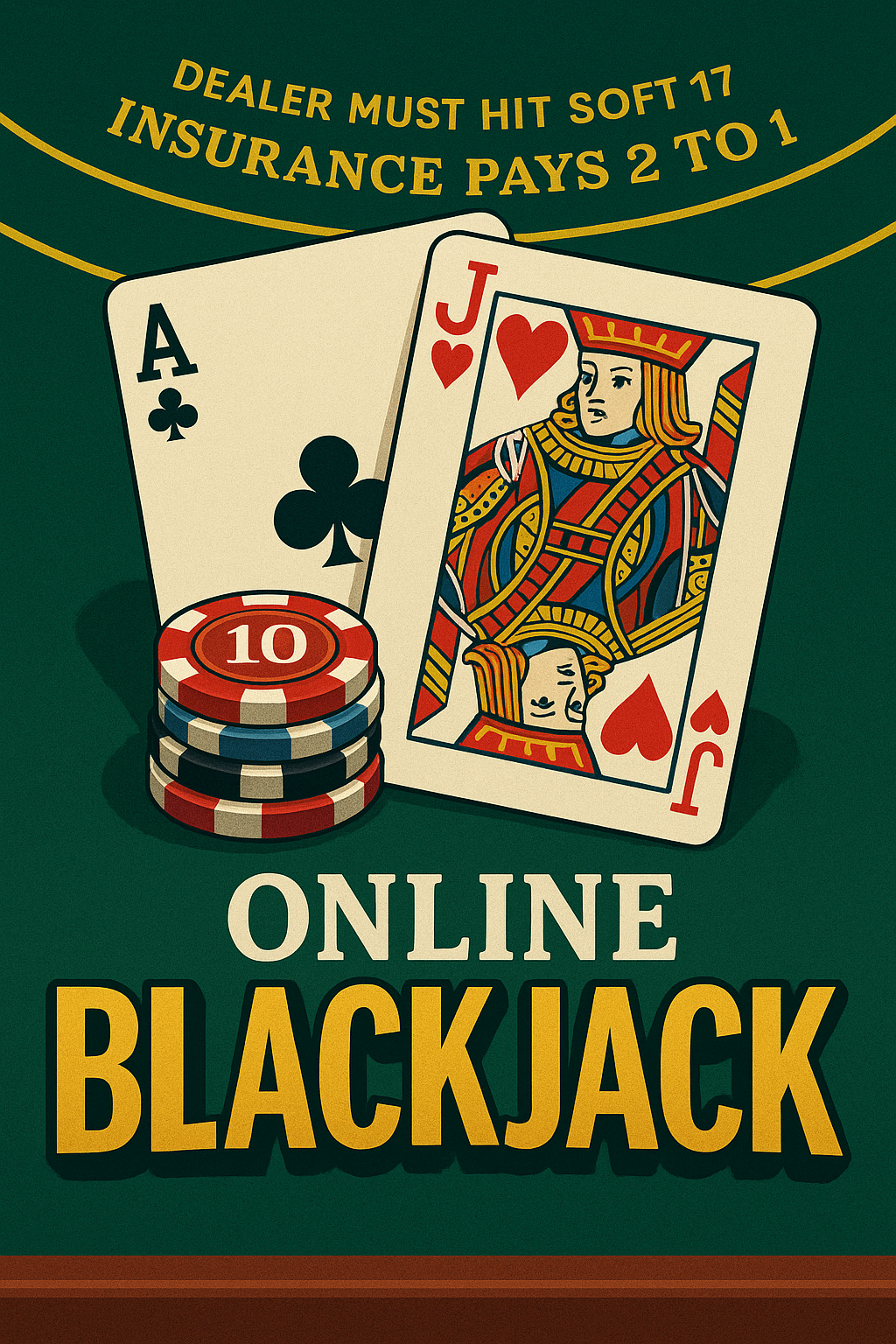
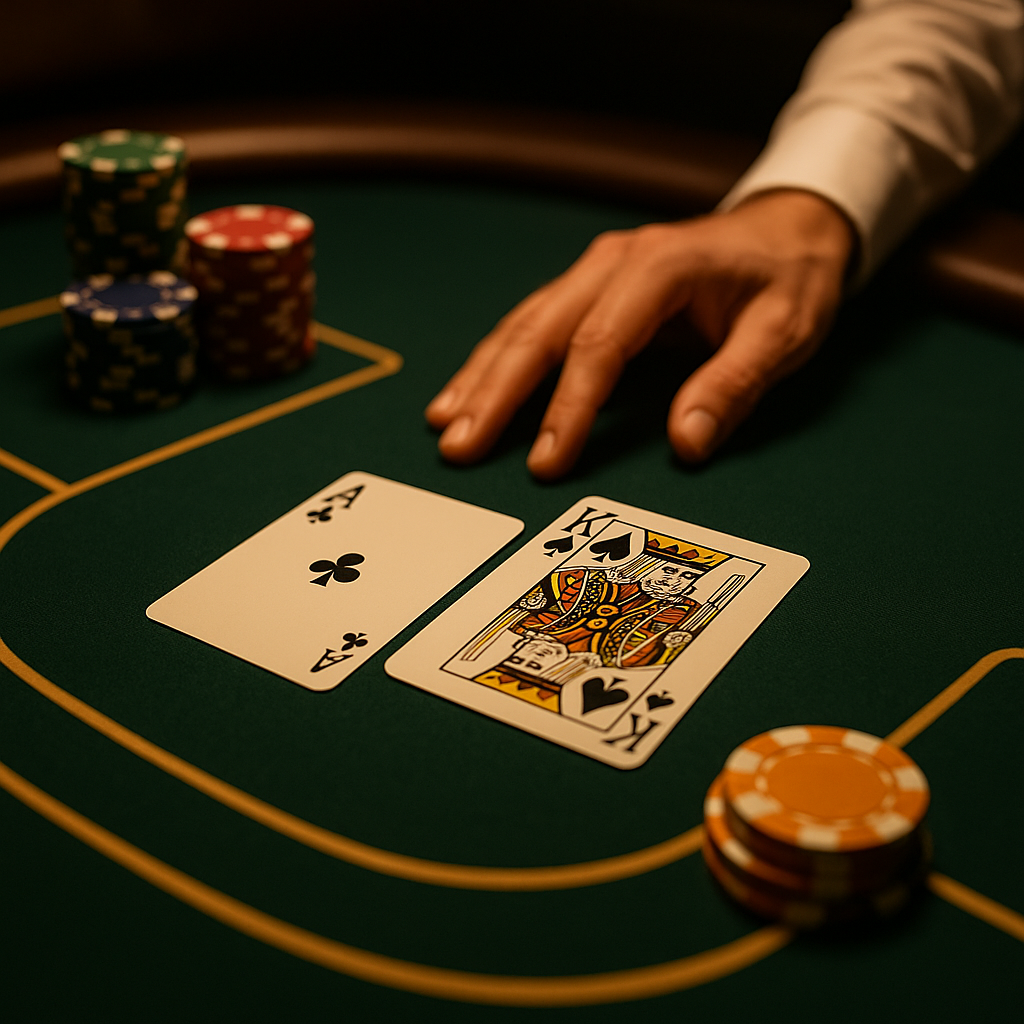
An Ace + any 10-value card (10, J, Q, or K) on the first two cards
-
It usually pays 3:2 (for example, a 10 bet wins 15 profit), unless the table uses a different payout rule
Step-by-Step: How to Play Blackjack
Even if you are new to casinos, you can learn blackjack in a few minutes. Here is the basic flow of the blackjack casino game.
1. Place Your Bet
At the start of each round:
-
Place your chips in the betting circle or box
-
Once the dealer signals “no more bets,” the hand begins
Always choose a bet size that fits your overall bankroll so you can withstand normal ups and downs.
2. Initial Deal
The dealer gives:
-
Two cards to each player (usually face up)
-
Two cards to themselves (one face up, one face down – the “hole card”)
Now you check your total and decide how to play your hand.
3. Player Actions
On your turn, you can usually choose among these options:
-
Hit: Take another card
-
Stand: Take no more cards; lock in your total
-
Double Down: Double your bet, receive exactly one more card, then stand
-
Split: If your first two cards are a pair (like 8–8 or K–K), you can split them into two separate hands, adding a second bet equal to your original
-
Surrender (if allowed): Give up your hand immediately and lose only half your bet
The best choice depends on:
-
Your total
-
The dealer’s visible upcard
-
The rules of the table
4. Dealer’s Turn
When all players have finished:
-
The dealer reveals their hole card
-
They draw according to fixed rules:
-
Hit until at least 17
-
Most tables require the dealer to hit “soft 17” (Ace counted as 11) or stand on all 17s
-
If the dealer busts and you did not, you win. If both hands stand:
-
Higher total wins
-
Equal totals result in a push (your bet is returned)
Table Rules That Affect Your Odds
Not all blackjack games are identical. Several rule variations change the house edge.
Number of Decks
Common setups:
-
Single-deck
-
2, 4, 6, or 8 decks
In general, fewer decks slightly improve player odds, assuming all other rules are equal.
Blackjack Payout
-
Standard: 3:2 payout for a natural blackjack
-
Less favorable: 6:5 payout (worse for players)
Avoid tables that pay 6:5 if you want the lowest house edge.
Dealer Hits or Stands on Soft 17
-
Dealer stands on soft 17 (S17): better for players
-
Dealer hits soft 17 (H17): increases the house edge slightly
Doubling and Splitting Rules
Look for tables that:
-
Allow doubling down on any initial total (not just 9–11)
-
Allow re-splitting pairs
-
Allow doubling after split
More flexible rules usually mean better long-term value.
Basic Strategy: The Foundation of Winning Blackjack
Basic strategy is a mathematically correct set of decisions for every possible hand vs. dealer upcard. Following basic strategy:
-
Minimizes the house edge (often down to around 0.5% in good games)
-
Eliminates guesswork based on “hunches”
While full strategy charts are detailed, here are some core principles.
Hard Totals (No Ace or Ace Counted as 1)
-
Always hit totals of 8 or less
-
With 9, double down against dealer 3–6 (otherwise hit)
-
With 10, double down against dealer 2–9 (otherwise hit)
-
With 11, double down against dealer 2–10 (hit vs Ace)
-
Stand on 12–16 if dealer shows 2–6 (otherwise hit)
-
Always stand on 17 or more
Soft Totals (Hands with Ace Counted as 11)
-
With A-2 or A-3, double vs dealer 5–6 (otherwise hit)
-
With A-4 or A-5, double vs 4–6 (otherwise hit)
-
With A-6, double vs 3–6 (otherwise hit)
-
With A-7:
-
Stand vs 2, 7, 8
-
Double vs 3–6
-
Hit vs 9, 10, Ace
-
-
With A-8 or A-9, almost always stand
Pair Splitting Guidelines
-
Always split Aces and 8s
-
Never split 5s or 10s (treat 5–5 as 10 and consider doubling)
-
Split 2s and 3s vs dealer 2–7
-
Split 6s vs 2–6
-
Split 7s vs 2–7
-
Split 9s vs 2–6 and 8–9 (stand vs 7, 10, Ace)
Memorizing or referencing a strategy chart shifts blackjack from a guessing game to a structured, math-based game.
Bankroll Management for Blackjack
Even with perfect basic strategy, you will still experience losing streaks. Good bankroll management keeps you in control.
1. Set a Total Session Budget
Before playing:
-
Decide how much money you can afford to lose
-
Treat it as the cost of entertainment, not investment capital
Once your budget is gone, stop playing.
2. Use Small, Consistent Bet Sizes
A simple guideline:
-
Keep your base bet around 1–2% of your total bankroll
-
Avoid sudden large bets after losing hands (“tilt betting”)
This helps you survive natural variance.
3. Avoid Complex Betting Systems
Martingale or progressive systems (doubling after each loss) can:
-
Look attractive in the short run
-
Quickly create very large bets that exceed your bankroll
They do not change the house edge and can cause large, sudden losses.
Card Counting: Advanced but Not Necessary
Card counting is a technique where players track the ratio of high to low cards remaining, adjusting bet size when the deck becomes favorable. While it can technically give a small edge:
-
Casinos strongly discourage it
-
It requires intense focus, practice, and tolerance for swings
-
Many modern games (continuous shufflers, multiple decks) are designed to make counting harder
For most players, basic strategy + smart bankroll management is the best combination.
Online vs Live Blackjack
You can play the blackjack casino game in several formats.
Online RNG Blackjack
-
Uses random number generator software
-
Fast-paced play
-
Great for practicing basic strategy at lower limits
Live Dealer Blackjack
-
Real dealer streamed from a studio
-
Physical cards and a real table
-
Slower, more social, and closer to land-based casino experience
Both formats usually offer similar rules; always check the table details before joining.
Responsible Gambling and When to Stop
Blackjack is skill-influenced, but it is still gambling:
-
Never play with money needed for rent, bills, or essentials
-
Take breaks to avoid emotional decisions
-
If you feel frustrated or obsessed with recovering losses, walk away
Responsible play ensures blackjack stays fun instead of becoming a problem.
Is the Blackjack Casino Game Right for You?
Blackjack is a great choice if you:
-
Enjoy mixing strategy with luck
-
Want a game where your decisions matter
-
Prefer a lower house edge compared to many other casino games
-
Like a fast, social table environment
If you are willing to learn basic strategy and manage your bankroll, the blackjack casino game can be one of the most rewarding experiences on the casino floor.

Nice post. I study one thing tougher on totally different blogs everyday. It is going to all the time be stimulating to learn content material from other writers and follow a bit one thing from their store. I’d favor to use some with the content material on my blog whether or not you don’t mind. Natually I’ll give you a hyperlink on your web blog. Thanks for sharing.